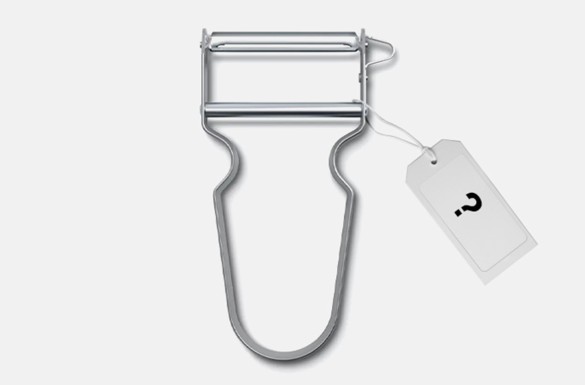
There are products you understand immediately. And there are products that need to be explained. Both can be technically excellent. Precisely engineered. With identical performance specifications. And yet one sells more easily.
The difference rarely lies in the technology. It lies in clarity.
Product design is not a matter of taste. It is strategic.
When we speak with executive teams at Milani, we are not talking about shapes. We talk about decisions. About priorities. About positioning. And ultimately about value creation.
Design begins with a simple question:
What problem are we solving – and for whom?
Growth comes from clarity.
People decide quickly. Even in B2B. Even when it comes to capital goods, medical technology, or complex mobility systems. Within seconds, an impression forms: structured or arbitrary, distinctive or interchangeable. That first impression influences trust. And trust influences willingness to pay.
In recent years, this has intensified even further. Through digital and social channels, the product itself has increasingly become the strongest form of marketing.
McKinsey analyzed 300 publicly listed companies over a five-year period. The result: companies that embed design strategically grow revenue 32 percentage points faster than their competitors and deliver 56 percentage points higher shareholder returns. Not because of aesthetics. But because of clarity.
Complexity eats margin.
Many companies respond to competitive pressure by adding more features. More variants. It may appear powerful, but it increases complexity. More complexity in development, production, and service. And complexity puts pressure on margins.
Strategic product design forces focus. Which functions create real customer value? Which ones only serve internal reassurance? What are customers actually willing to pay for? This moment can be uncomfortable. But it is exactly where economic value emerges.
Consistent user focus is not idealism. It creates clarity about what truly matters. Companies that think from real user value reduce product variants, simplify bill of materials, and improve scalability.
I experienced this firsthand in a capital goods project. Technically, many things were possible. In the end, the product was purchased because of two clear advantages. Once we aligned the product consistently around those strengths, the number of variants decreased, the cost structure became more transparent, and communication became clearer. The result was not a new feature. It was a better margin.
Product design does not only work in the market. It also works inside the organization. Products that function intuitively lead to fewer errors, lower support effort, and reduced training costs. That, too, is economic value.
Design is risk management.
Complex products do not emerge in a linear process. Engineering, regulatory affairs, production, marketing, and sales are interconnected. Every decision influences the next. The later fundamental questions are clarified, the more expensive become corrections, adjustments and delays. In regulated industries, this effect multiplies.
That is why we begin development processes with user research in the field. Not in meeting rooms, but with the people who use the product every day. What we observe there regularly changes priorities. It prevents costly missteps before they occur. And it gives the entire development team a shared foundation for making better decisions.
Design works at the beginning, in usage scenarios, product architecture, and priorities. When these fundamentals are clarified early, friction later in development is reduced. Products reach the market faster, more efficiently, and with fewer surprises.
Design belongs in the executive suite.
Companies that integrate design early into corporate strategy quickly notice the difference: discussions become shorter. Decisions become clearer. Portfolios become sharper.
Design is not an extra for good times. It is a lever for growth, margin, and differentiation.
Those who understand this stop budgeting design and start leading it.