
Sustainable product development
Ecodesign & Circular Economy Design
New regulatory requirements, such as the ESPR and PPWR, are fundamentally changing product development. At the same time, expectations regarding reparability, material transparency, and recyclability are increasing.
We help companies systematically integrate ecodesign and design for circular economy into their product strategy and development processes, from analysis to implementation.
Our Sustainable Product Development Expertise
Life Cycle Assessments to inform clear design decisions
Using life cycle assessments and impact assessments, we determine the environmental footprint of your products and value chain and identify the most effective levers for sustainable improvement.
Portfolio Analysis & Strategic Roadmaps
We assess your product portfolio against regulatory requirements such as ESPR and PPWR, material strategies, and circularity and develop actionable roadmaps to guide your product transformation.
Ecodesign for market-ready, compliant products
We systematically integrate ecodesign into architectural, material, and specification decisions, embedding regulatory requirements from the outset while maintaining a strong focus on economic viability and time to market.
Circular Innovation & Business models
We develop reuse, remanufacturing, and recycling strategies and establish economically viable business models that enable circular value creation.
Take-Back Services for Circular Economy
We design user-centered take-back and service systems, focusing on user adoption, practical implementation and brand experience.
Sustainable & Circular Packaging
We design sustainable packaging solutions with a focus on material strategy, recyclability, PPWR compliance and economic feasibility.
Regulatorily integrated. Economically viable.
ESPR-compliant product development
The demands on product development are changing noticeably. The Ecodesign for Sustainable Products Regulation (ESPR) defines binding requirements for repairability, reusability, recyclability, resource efficiency, and digital product information. These provisions will apply to nearly all products placed on the EU market and must already be considered at the product architecture and specification stage.
In parallel, the Packaging and Packaging Waste Regulation (PPWR) introduces new requirements for packaging concepts, particularly regarding recyclability, recycled content, material reduction, and labeling.
Whether you are just getting started or already have experience in product and packaging sustainability, we integrate ESPR- and PPWR-relevant criteria early and systematically into your product and packaging development processes.
Our data-driven methods provide a robust foundation for design and architecture decisions, from portfolio analysis and Life Cycle Assessments to implementation in material selection, engineering, and documentation.
By integrating regulatory requirements early, development risks can be reduced and costly adjustments avoided later. We maintain a clear balance between user needs, technical feasibility, and economic viability. We develop solutions that are compliant, technically sound, and economically viable while avoiding unnecessary complexity in product development.
Benefit from our expertise in sustainable product design
Let's talk about how we can best support you on your way to successful ecodesign and circular design.
Milani is a Reffnet consulting partner
BAFU funding for ecodesign and circular projects
As part of the Reffnet network, we support companies in applying for and implementing BAFU funding for ecodesign and circular economy projects. Funding is available, among others, for Life Cycle Assessments, specific ecodesign projects, or the exploration of circular business models.
Download now!
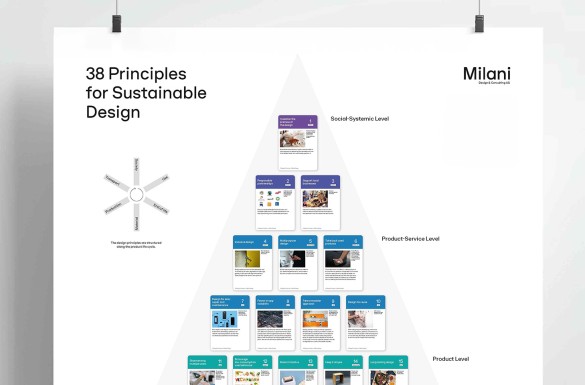
38 Principles for sustainable design
Our 38 Principles for Sustainable Products provide a simple guide for integrating sustainability into product development.
Solid data for a sustainable product strategy & ecodesign
Life cycle assessment (LCA)
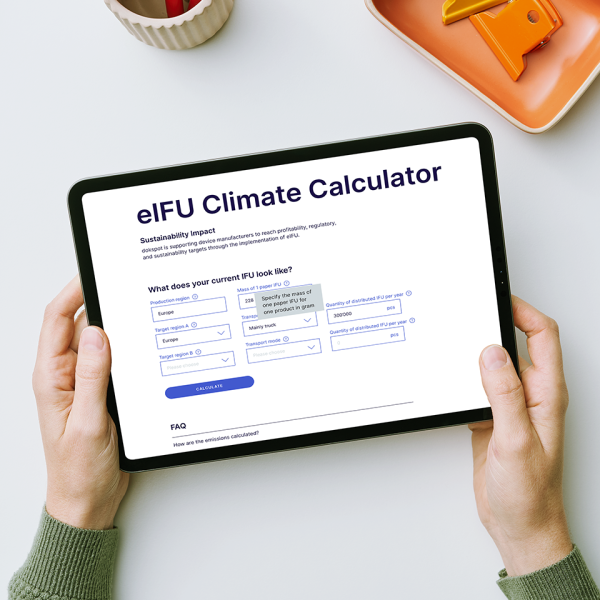
Life Cycle Assessments provide robust data on CO₂ emissions, material use, and value chains. They make visible which levers in product architecture, material selection, and logistics truly matter.
We develop decision-relevant LCAs and translate the results directly into concrete design and architecture decisions.
Example Projects Ecodesign & Circular Design
Learn how we have helped companies prepare for new ecodesign regulations and future market demands for sustainability.
Across industries. Practice-oriented.
Circular Leaders Roundtable
How can Ecodesign and Circular Economy principles be successfully integrated into existing development processes?
Miani’s Circular Leaders Roundtable brings together decision-makers and project leaders from industry, consumer goods and medtech in a curated circle. The focus lies on practical implementation questions, and solution approaches for Ecodesign and Circular Design.
Past topics include:
-
European regulations and their implications for Switzerland (ESPR, CSRD, PPWR)

-
Key success factors for embedding Ecodesign within organisations
-
Product life cycle assessments and EPDs in development and ERP processes
-
Plastic-free packaging
-
Scope 3 reporting and the comparison of generic versus supplier-specific emission data
-
Design for Recycling and recycling processes for electronics