Sustainability assessments in the rail industry: Which ones matter for suppliers?
Sustainability is increasingly becoming a key procurement criterion in the rail industry. Operators and manufacturers expect their suppliers to demonstrate their environmental, social, and governance (ESG) performance. As a result, many suppliers are asking themselves: Which assessments and certifications are relevant for demonstrating sustainability performance in the rail industry, and how can SMEs in particular approach the topic pragmatically?
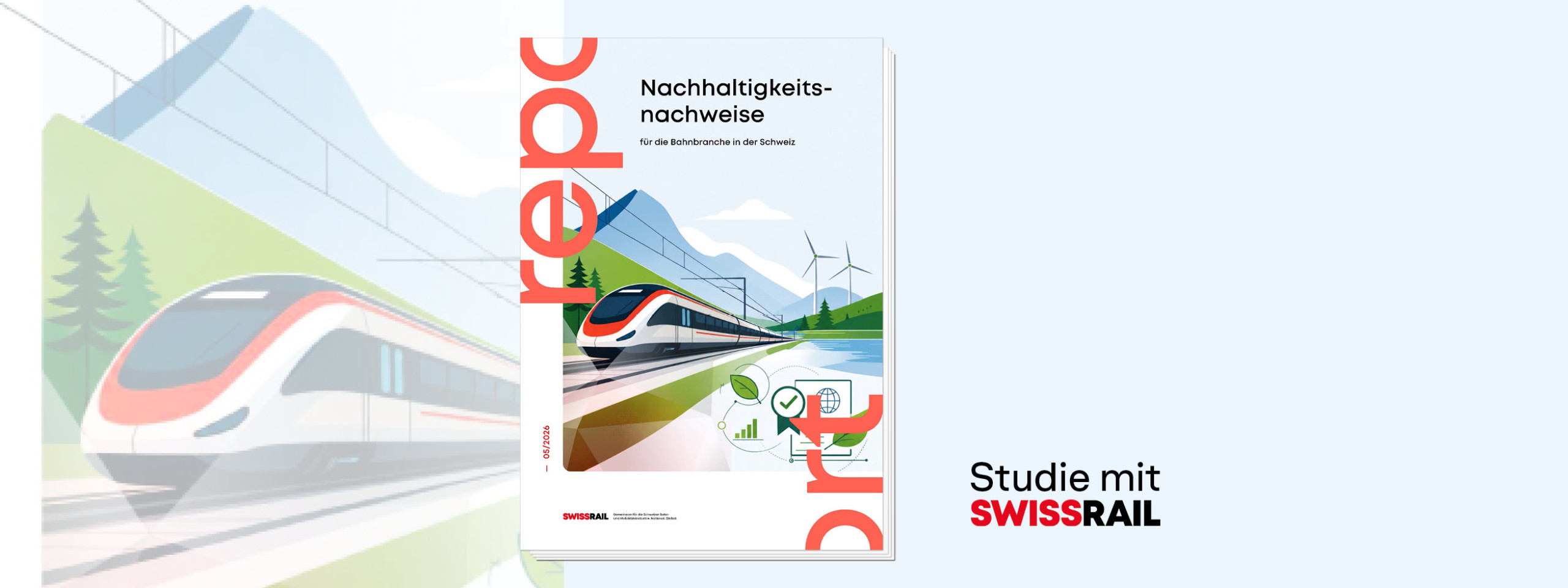
On behalf of Swissrail, the association of the Swiss rail and mobility industry, Milani and PROSE analyzed the market and compared relevant sustainability assessment systems. The resulting report provides practical guidance, particularly for SMEs navigating an increasingly complex landscape.
Sustainability assessments are becoming a procurement criterion
Sustainability ratings, certifications, and ESG tools were long considered voluntary additions. In the rail industry, however, they are increasingly becoming part of tenders and procurement processes. Several developments are driving this shift. Government climate and sustainability targets are increasing the pressure on rail companies to demonstrate their measurable contribution to reducing carbon emissions. New sustainability reporting and due diligence requirements are raising expectations. At the same time, international supplier networks are making standardized assessments increasingly important for evaluating sustainability risks throughout the supply chain.
As part of the report, Switzerland’s three largest rail operators, SBB, BLS, and SOB, were also consulted on the requirements they place on their industry partners. All three operators emphasized that sustainability should be transparent, measurable, and embedded throughout the entire supply chain. For suppliers, demonstrating their sustainability performance is therefore increasingly becoming a prerequisite for participating in tenders and building long-term business relationships.
What types of sustainability assessments are available?
The market is complex and difficult to navigate. The number of sustainability ratings, certifications, standards, and tools continues to grow. For SMEs in particular, maintaining an overview can be challenging. They are often expected to meet the same requirements as large corporations while having significantly fewer resources available. This is precisely why we wanted to understand which assessment systems are truly relevant to the rail industry and which approaches companies should realistically consider today.
For the Swissrail report, we conducted systematic research and carried out a broad market analysis. We identified 39 providers and approaches for assessing and demonstrating sustainability performance. These included ESG reporting tools, supply chain and supplier due diligence solutions, assessment platforms, memberships, standards and certifications. Based on criteria defined jointly with Swissrail, we then conducted an in-depth analysis and comparison of eight providers. Key criteria included suitability for SMEs in the Swiss rail industry, broad ESG coverage, comparability, transparency, verifiability and international acceptance.
One key finding of the analysis is that EcoVadis has established itself as the most widely accepted sustainability rating platform in the rail industry. However, this does not mean that EcoVadis is automatically the right solution for every company. Depending on a company’s strategy, customer requirements, and existing sustainability activities, other tools or assessment systems may be more appropriate. The report therefore compares a range of solutions and highlights their strengths, weaknesses, and potential applications.
Sustainability assessments do not start with a tool
Many companies looking to demonstrate their sustainability efforts start by searching for software or a certification. But the crucial first step comes earlier. What matters most is to first establish a clear structure for sustainability within the organization. Companies need clarity on which sustainability topics are relevant to their business and which measures are already in place.
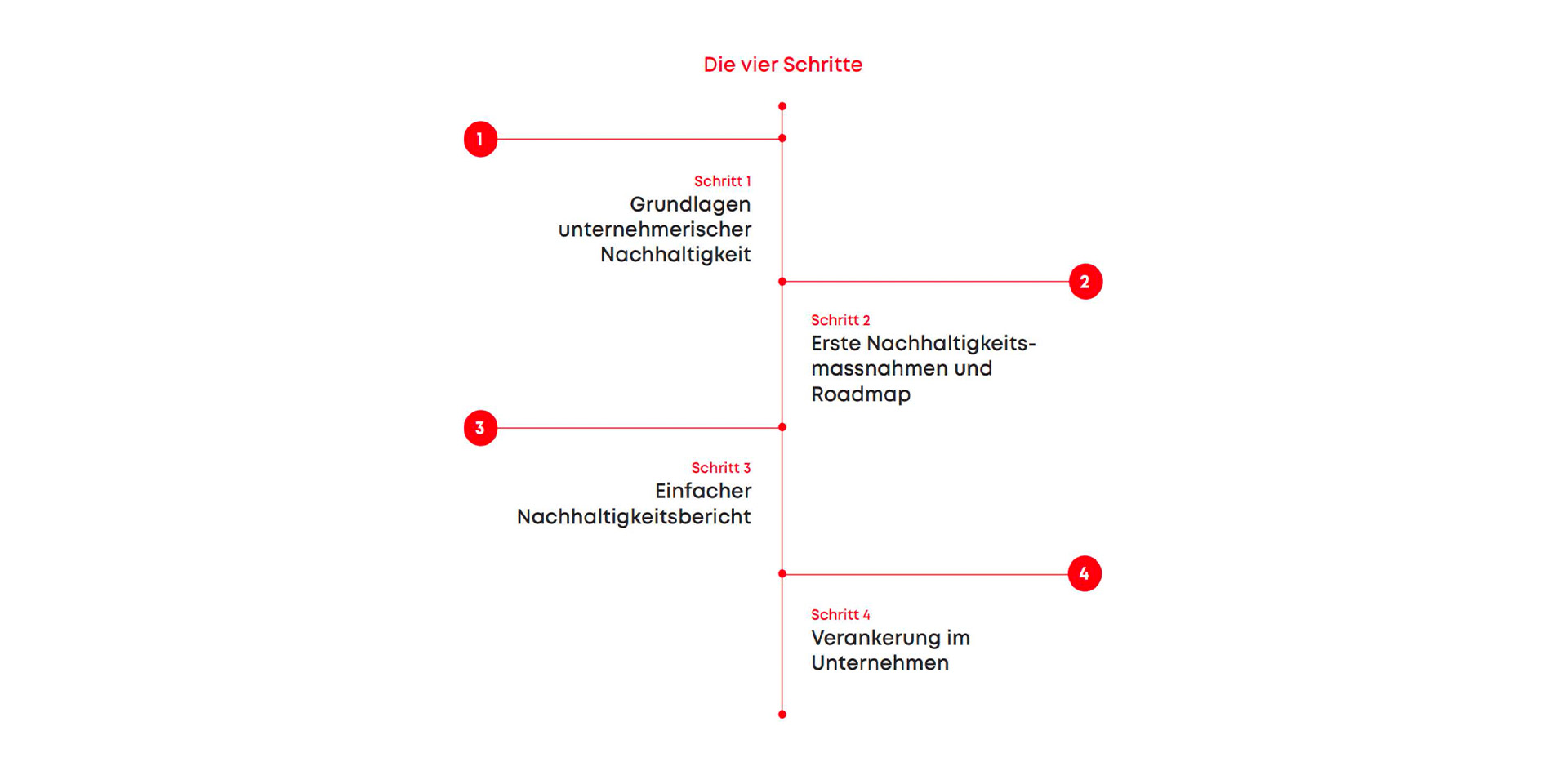
For Swissrail, we therefore developed a pragmatic guide that supports companies step by step in structuring their sustainability efforts and building the documentation needed to demonstrate them. The recommendations in the guide are organized around four steps:
- Establish the foundations for corporate sustainability and define responsibilities.
- Prioritize initial sustainability measures and develop a roadmap.
- Document activities, data, and progress in a straightforward sustainability report.
- Embed sustainability in processes and throughout the organization over the long term.
Many companies are not starting from scratch. Training programs, energy and waste management, or internal policies are often already part of day-to-day operations. What is frequently missing is clear and traceable documentation. It therefore makes sense to begin by assessing the current situation: What are we already doing? What can we demonstrate today? And where are the most significant gaps? Only on this basis can a company determine which assessments, ratings or certifications are genuinely relevant to its business.
Sustainability as a competitive advantage
Sustainability assessments are about much more than administrative work for tenders. When used strategically, they help companies anticipate customer requirements, reduce supply chain risks and strengthen their position in procurement processes and supplier evaluations.
The real value, however, does not lie in the assessment or rating itself. Companies that systematically examine their products and supply chains often identify opportunities that go far beyond achieving a better sustainability score: lower life cycle costs, more resilient supply chains or circular business models and services that stand out in the market.
Through our many years of experience in ecodesign and design for the circular economy projects, we know that the foundations for commercially viable solutions are established during product development. This includes material selection, product architecture, maintainability, and the question of how services can be integrated with the product. Sustainability becomes a competitive advantage when it is not simply documented for tenders but integrated into the development of products and services from the very beginning.
About the report
The report «Sustainability assessments for the rail industry in Switzerland» was commissioned by Swissrail and jointly developed by Milani Design & Consulting and PROSE. It is available to Swissrail members and provides practical guidance, particularly for SMEs, on selecting and implementing sustainability assessments.
Milani Design & Consulting combines strategic product development with ecodesign and circular economy expertise.
Authors
- Nando Schmidlin, Circular Design Strategist
- Nadine Wolf, Lead Innovation & Circular Business Design
PROSE specializes in consulting and engineering for railway technology and rolling stock.
Author
- Chantal Pietsch, Senior Consultant Procurement and Sustainability
Would you like to integrate sustainability into your product development?
We support companies in ecodesign, circular economy strategies, and sustainable product innovation.
How Milani is shaping public transportation
Milani develops products and mobility experiences for public transportation—from strategic product development and vehicle interior and exterior design to ecodesign and circular economy innovation.